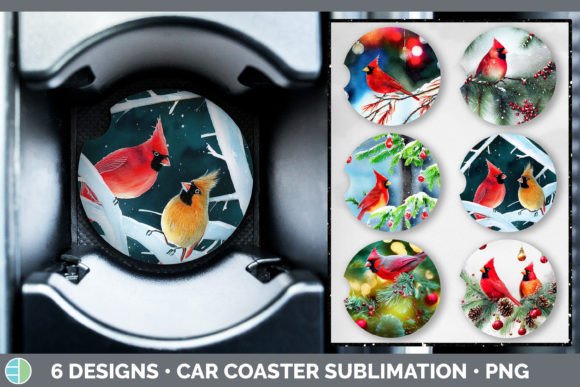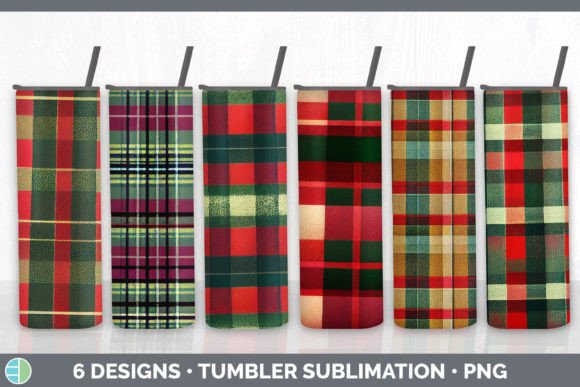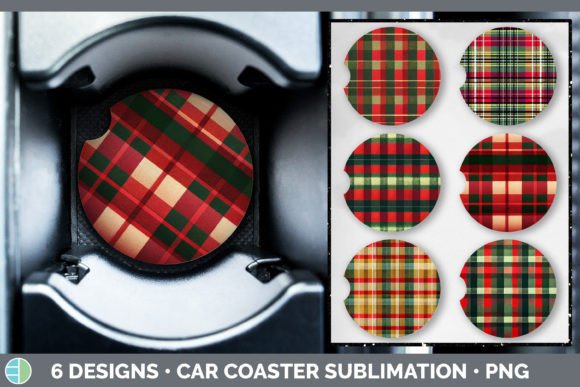
Review: Christmas Plaid Car Coaster Sublimation
As a designer who has spent more hours than I care to count hunched over an embroidery hoop, I have learned that not every digital file translates well into thread. We see thousands of design assets flood the market every season, promising crisp lines and perfect coverage. But when you actually load them into your machine, the reality can be quite different. Today, I am taking a close, practical look at Christmas Plaid Car Coaster Sublimatio. While the title suggests a sublimation focus, my interest lies in how this graphic holds up when interpreted as a machine embroidery design for tangible, handmade goods.
First Impressions and Visual Mood
The immediate appeal of this piece is its nostalgic warmth. The plaid pattern evokes classic holiday imagery—think flannel shirts by the fire or vintage wrapping paper. For those of us creating holiday embroidery collections, this mood is invaluable. It does not scream for attention with neon brightness; instead, it offers a cozy, traditional aesthetic that fits seamlessly into winter-themed product lines. As part of the Illustrations category, the artwork relies on strong geometric structure rather than complex shading, which is generally a good sign for stitch conversion. However, the devil is always in the details when moving from pixel to needle.
Real-World Application: The Holiday Gift Scenario
To truly evaluate Christmas Plaid Car Coaster Sublimatio, I imagined a specific client project. A local boutique owner wanted a set of coordinated personalized gift items for December sales. She needed designs that would work on both a heavy canvas tote bag design and a softer fleece sweatshirt embroidery project. This is where the rubber meets the road. Would this plaid pattern look like a cohesive brand element, or would it look messy and over-stitched?
In this scenario, the design’s layout is crucial. If used on a tote bag, the larger scale allows the plaid intersections to breathe. The satin stitch borders, if applied correctly around the motif, can frame the pattern beautifully, giving it a finished, professional look. For the sweatshirt, however, the fabric texture changes everything. Fleece has a pile that can swallow small details. If the stitch density is too high, the fabric will pucker, ruining the sleek look of the garment. If the density is too low, the backing stabilizer might show through, breaking the visual continuity of the plaid.
Performance on Different Fabrics and Hoops
One of the biggest challenges with plaid patterns in embroidery is maintaining straight lines. In a digital embroidery file, lines are perfect. In reality, fabric moves. When testing this design on a curved surface, such as a cap or a rounded pillow cover, tension becomes your enemy. The horizontal and vertical lines of the plaid must remain parallel. If they warp, the design looks amateurish. I recommend using a cut-away stabilizer for stretchy fabrics to provide maximum support. For woven cottons, like those used in embroidered patch creation or kitchen towels, a tear-away might suffice, but only if the hoop size is appropriate for the design dimensions.
Speaking of hoop size, this is a critical check. Before purchasing or committing to this design for a small shop product, verify the maximum dimensions. A plaid pattern that is too large for a 4x4 hoop will require splitting or resizing, which can distort the aspect ratio and ruin the symmetry of the tartan. Always confirm the available sizes match your machine’s capabilities.
Stitch Types and Technical Considerations
From a technical standpoint, how the plaid is rendered matters immensely. Is it filled with solid fill stitch blocks, or does it use clever running stitch outlines to suggest the pattern? Solid fills on a large plaid can result in a stiff, cardboard-like feel on the final finished product. This is undesirable for wearable custom apparel or soft baby embroidery items. Ideally, the design should utilize a mix of stitch types to keep the fabric flexible. If the design relies heavily on dense satin stitches for the plaid lines, ensure your thread tension is perfectly calibrated. Poor tension on long satin runs leads to looping and snagging, which is a nightmare for Etsy seller reputation management.
Thread color selection also plays a pivotal role. Plaid requires contrast. If you choose thread colors that are too similar in value, the pattern will disappear, especially from a distance. Test your colorways on both light and dark fabrics. A design that pops on white cotton might vanish on navy blue fleece. Creating a printable mockup or digitally simulating the threads on different background colors can save you hours of wasted thread and fabric during the physical testing phase.
Commercial Viability and Brand Consistency
For craft business owners, consistency is key. If you are building a holiday collection, Christmas Plaid Car Coaster Sublimatio needs to play well with other elements. Does it clash with your existing font choices? Does it overpower simpler motifs? Using this design as a central focal point on a tea towel or a pillow cover can elevate the perceived value of the item. Customers associate intricate, well-executed plaid with quality and tradition. This perception boosts buyer engagement and trust.
However, be mindful of licensing. Just because a file is labeled for commercial embroidery does not mean you can resell the embroidery file itself. Always read the terms. Most licenses allow you to sell the physical handmade product, such as a stitched apron or hat, but prohibit sharing the digital data. Protecting your design assets and respecting intellectual property is fundamental to running a sustainable creative enterprise.
Practical Designer Notes for Success
Before you launch this design into your production line, follow these steps to ensure quality:
- Test on Scrap Fabric: Never stitch directly on your final garment. Use the exact same fabric and stabilizer combination you plan to sell.
- Check Stitch Density: Feel the back of the test stitch. If it feels like a thick plate of plastic, reduce the density or change the fill type to prevent stiffness.
- Inspect Small Details: Look closely at the intersections of the plaid. Are there loose jumps or messy trims? Clean up any unnecessary travel stitches in your software if possible.
- Contrast Check: View your test stitch in black and white. If the pattern loses definition without color, you need higher contrast threads.
- Wash Test: Wash and dry your sample. Does the plaid shift? Do the threads shrink differently than the fabric? This step is vital for items like baby clothes or kitchen linens that undergo frequent laundering.
Final Verdict
Christmas Plaid Car Coaster Sublimatio offers a charming, seasonal aesthetic that, when handled with technical precision, can be a standout addition to your holiday catalog. It is not a "load and go" design for beginners; it demands respect for fabric behavior and machine tuning. But for the experienced apparel decorator or dedicated maker, it provides a versatile template for creating high-value, emotionally resonant products. Whether you are stitching a single personalized gift or a batch of inventory for a winter craft fair, this design rewards careful preparation with a polished, professional result. Take the time to test, adjust, and refine, and you will find it serves your embroidery project goals well.